
Eye On Oncology
Let’s Identify the related signs and symptoms of certain drugs to intervene.
Cancer treatment can take a big toll on the ocular surface, adding yet another burden on affected patients. As eyecare providers, we have a responsibility to recognize when ocular signs and symptoms may be tied to these therapies. This way, we can manage these patients thoughtfully and help preserve their comfort and quality of life in the process.
Here, we discuss a few cancer therapies commonly associated with ocular surface toxicity and how we can intervene.

THERAPEUTIC MANAGEMENT
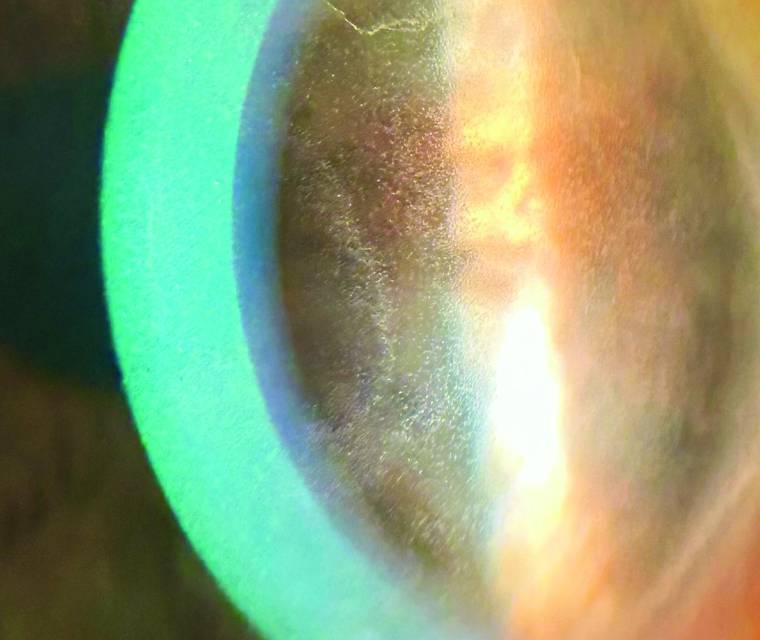
Elahere (mirvetuximab soravtansine-gynx, AbbVie) for ovarian cancer contains a warning label that acknowledges it can cause corneal toxicity. Specifically, 59% of patients using the drug displayed adverse ocular signs within 6 months of using it, with 36% developing keratopathy (Figure).1,2 Despite these side effects, Elahere’s effectiveness has made it highly desirable.3 To avoid permanent corneal damage, AbbVie suggests prescribing prophylactic artificial tears as needed to protect the ocular surface and topical steroids four to six times daily to reduce keratopathy. The prescriber may also choose to withhold or discontinue Elahere until corneal complications have been resolved.1
Cytarabine (cytosine arabinoside or ara-C, Pfizer) is used to treat leukemia and lymphoma, as it penetrates the blood-brain barrier to target cancer cells.4 Cytarabine also crosses the blood-aqueous barrier, leading to corneal changes, such as bilateral epithelial microcysts and keratoconjunctivitis. Specifically, more than 85% of patients report signs and symptoms of keratitis within 1 week of initiating cytarabine.5 Fortunately, treatment with a soft steroid one to four times daily typically improved symptoms within 1 week and resolved clinical signs within 2 to 3 weeks.5 Also, prophylactic topical steroids beginning 1 day prior to therapy reduced the incidence of ocular signs and symptoms by 8% to 16%.4,5
Tarceva (erlotinib, Cheplapharm), an epidermal growth factor receptor inhibitor, treats non-small cell lung cancer. The receptors are expressed on the ocular surface; therefore, indirect inhibition decreases corneal cell proliferation and regeneration.6 Ultimately, this causes signs and symptoms of keratitis with delayed corneal healing in12% of patients7. As a result, preservative-free artificial tear use, as needed, is recommended for patients using Tarceva.6,7
FORWARD-THINKING OUTLOOK
As ODs, we must acknowledge why patients take these medications and recognize their current quality of life. It is our job to be educated on the potential ocular side effects of cancer medications to improve comfort during the treatment process and to remember that the benefits of survival undoubtedly outweigh the symptoms of keratitis.
ONCOLOGY COLLABORATION
Our jobs as ODs in caring for cancer patients are to support the ocular surface, reduce symptoms, and coordinate with oncology, so patients using these medications can maintain vision and comfort on their therapy regimen.
Ready to Claim Your Credits?
You have attempts to pass this post-test. Take your time and review carefully before submitting.
Good luck!
Recommended
 Sept/Oct 2026 ISSUE
Corneal Graft Rejection Versus Failure
Kianna Swanson; Jacob Lang, OD, FAAO, Dipl ABOKianna Swanson; Jacob Lang, OD, FAAO, Dipl ABO