Seeing Red: Ocular Rosacea
Catching this condition early is crucial to prevent permanent damage.
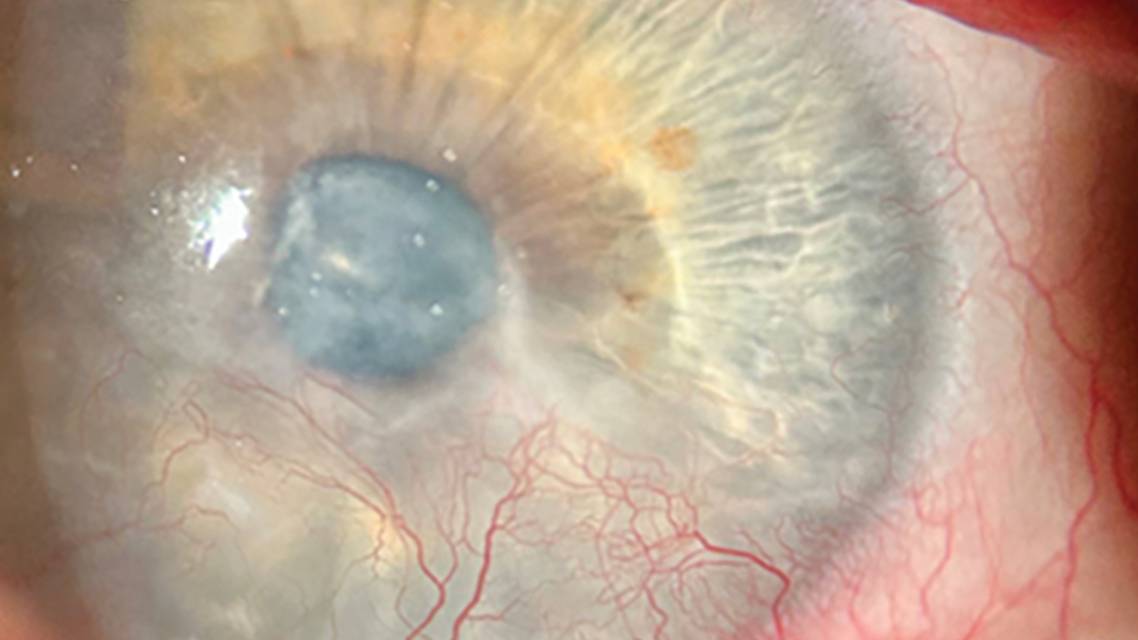
A patient with dry eye disease (DED) presented complaining of red, watery, gritty eyes. Despite following her regimen of preservative-free artificial tears, she didn’t notice any improvement. Examination revealed her clinical signs had not improved either (Figure). This is because the underlying cause of her DED was ocular rosacea. Here, we discuss why you should keep this condition on your radar.

BACKGROUND
Rosacea is commonly recognized as nothing more than flushed, rosy cheeks; however, this chronic, inflammatory skin condition can cause permanent ocular damage. More than 50% of those with rosacea report related ocular symptoms.1
Ocular rosacea manifests as bilateral, red, dry, blurry, light-sensitive, irritated eyes with facial flushing. It may appear as eyelid telangiectasia, meibomian gland dysfunction, conjunctival injection, superficial punctate keratitis, and, in severe cases, corneal neovascularization with scarring or perforation.
FORWARD-THINKING OUTLOOK
This case helps us understand the importance of managing the patient’s underlying condition, rather than just their symptoms. As awareness of ocular rosacea increases, we must focus on a detailed case history, systemic signs, and antiinflammatory therapies.
Ocular rosacea is driven by an imbalance of inflammatory pathways, including increased proinflammatory cytokine activity. This leads to matrix metalloproteinase dysregulation. The result is ocular surface inflammation and tissue damage. Studies suggest oxidative stress is implicated in ocular rosacea and contributes to cellular injury, sustained inflammation, and pathological angiogenesis.2,3
CASE DISCUSSION
We used topical steroids to stabilize this patient’s cornea and then opted for a topical immunomodulator and oral doxycycline, continuing the preservative-free artificial tears. We prescribed a topical immunomodulator because it inhibits T-cell activation and decreases proinflammatory cytokine release, and we prescribed oral doxycycline for its antiinflammatory and antiangiogenic properties.
Intense pulsed light, which uses heat on abnormal vasculature to decrease redness and swelling and promote collagen remodeling, can be considered if symptoms persist or worsen.
With treatment, the patient showed regression of corneal neovascularization, reduced meibomian gland inflammation, and improved lid telangiectasia. Unfortunately, delayed diagnosis and intervention due to masquerading symptoms resulted in corneal thinning.
Ready to Claim Your Credits?
You have attempts to pass this post-test. Take your time and review carefully before submitting.
Good luck!