
Johns Hopkins Researchers Explore Why Episodes of Low Blood Sugar Worsen Eye Disease in People with Diabetes

Researchers at Johns Hopkins Medicine say they have linked low blood sugar levels in people with diabetes with a molecular pathway that is turned on in oxygen-starved cells in the eye.
The research, involving human and mouse eye cells and intact retinas grown in a low sugar (low glucose) environment in the laboratory, as well as mice with low glucose levels, was published in the January issue of Cell Reports.
“Temporary episodes of low glucose happen once or twice a day in people with insulin-dependent diabetes and often among people newly diagnosed with the condition,” Akrit Sodhi, MD, PhD, the Branna and Irving Sisenwein Professor of Ophthalmology at the Wilmer Eye Institute at Johns Hopkins Medicine, said in a news release. Low glucose levels can also occur during sleep in people with non-insulin dependent diabetes. “Our results show that these periodic low glucose levels cause an increase in certain retinal cell proteins, resulting in an overgrowth of blood vessels and worsening diabetic eye disease."
Dr. Sodhi says the current study suggests that people with diabetic retinopathy may be particularly vulnerable to periods of low glucose, and keeping glucose levels stable should be an important part of glucose control.
Read the full Johns Hopkins Medicine release here.
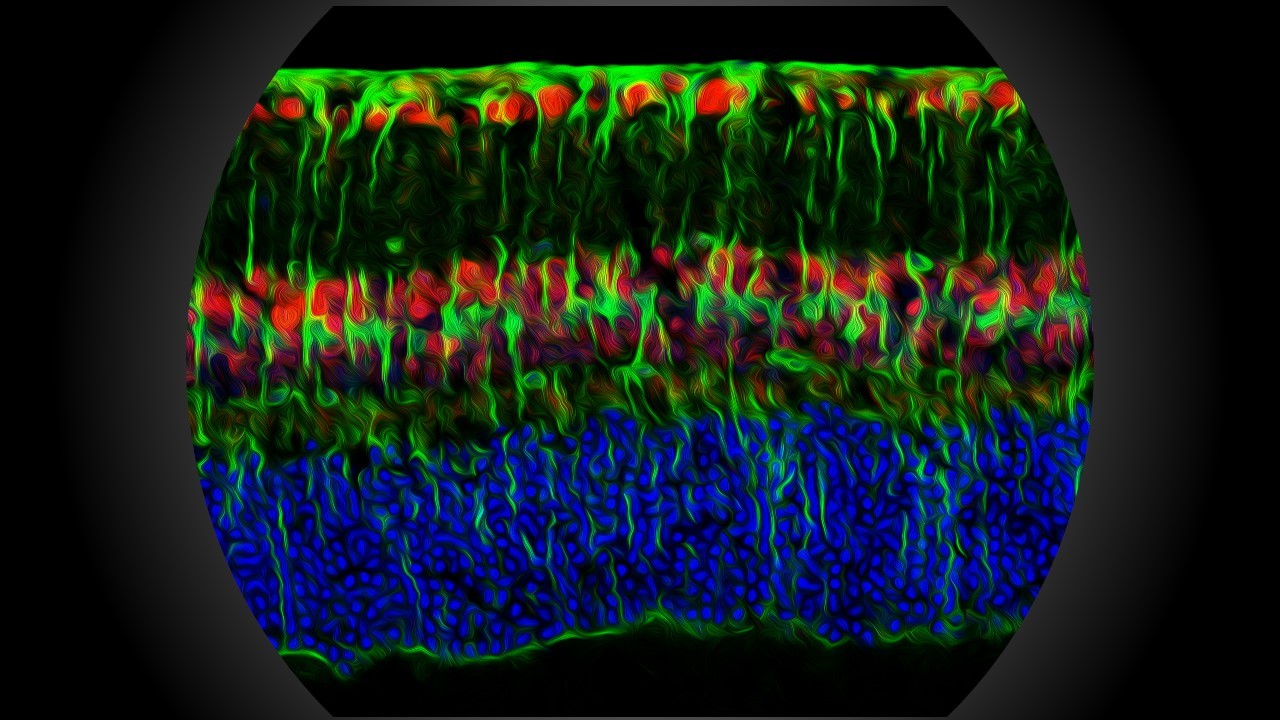
Artistic rendition of an immunofluorescent image of a mouse retina taken during a transient episode of low serum glucose demonstrating accumulation of a protein, Hypoxia Inducible Factor (HIF)-1 alpha(red), in inner retinal cells. A recent study from Guo et al., published in Cell Reports provides insight into how accumulation of HIF-1 alpha in retinal cells during these transient episodes of low serum glucose (i.e., hypoglycemia) can promote the expression of the angiogenic mediators that worsen diabetic retinopathy. Credit: Alexander Sodhi, McDonogh School.