
Clearside Biomedical Announces Positive Safety Results from OASIS Phase 1/2a Clinical Trial of CLS-AX for the Treatment of Wet AMD
Clearside Biomedical announced positive safety results from OASIS, its ongoing phase 1/2a clinical trial of CLS-AX (axitinib injectable suspension) administered by suprachoroidal injection via Clearside’s SCS Microinjector. OASIS is evaluating CLS-AX for the treatment of wet age-related macular degeneration (wet AMD).
Data reported today includes results from Cohort 2 as well as combined data from Cohorts 1 and 2. The primary endpoints were achieved in Cohort 2 (n=5), as the 0.1 mg dose of CLS-AX was well tolerated with no serious adverse events. There were no treatment emergent adverse events related to aflibercept, CLS-AX or the suprachoroidal injection procedure; and there was no dispersion of drug into the vitreous. In addition, there were no adverse events related to IOP, inflammation, or vasculitis. The OASIS Safety Monitoring Committee has reviewed the data and approved advancing to Cohort 3 with a dose of 0.5 mg of CLS-AX.
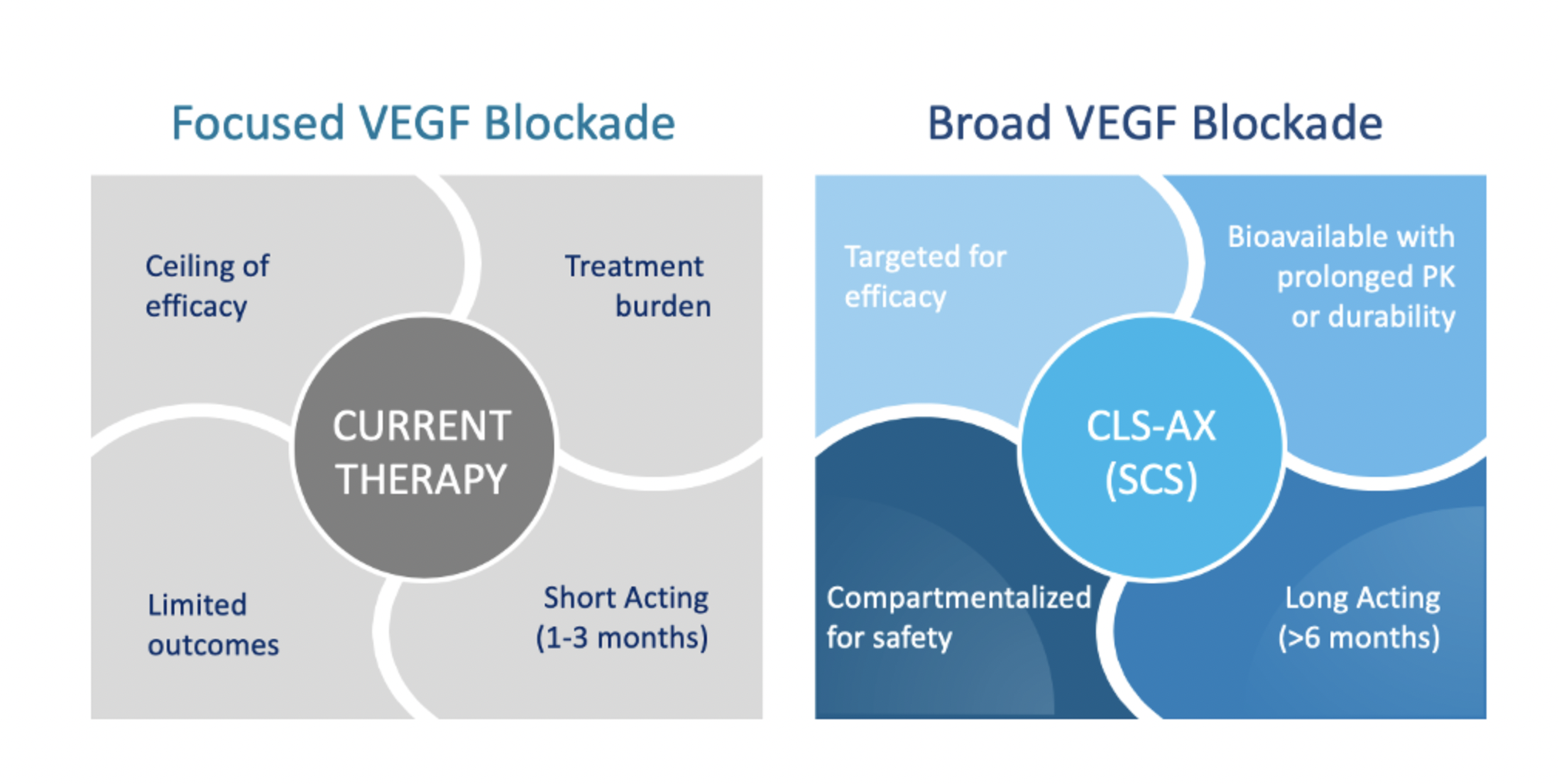
“Our OASIS trial continues to demonstrate positive safety results as we escalate the dose," Thomas A. Ciulla, MD, MBA, Chief Medical Officer and Chief Development Officer, said in a company news release. "Given that this trial represents the first time a tyrosine kinase inhibitor has been injected suprachoroidally in humans, we started OASIS with low dose levels to establish a foundation for safety. We believe the absence of any dose limiting toxicities in the first two cohorts of the OASIS trial, combined with our pre-clinical toxicology data, supports our plan to escalate to the higher CLS-AX dose of 0.5 mg in Cohort 3 rather than the previous 0.3 mg dose. We have initiated patient screening for Cohort 3, with target completion of this cohort planned for mid-year 2022. We look forward to gathering more data on the potential benefits of combining targeted and compartmentalized suprachoroidal delivery with the broad pan-VEGF attributes of axitinib for patients suffering from wet AMD.”
Data Summary
In Cohort 2, five patients were enrolled with an average age of 78 years. All patients were anti-VEGF treatment-experienced, having undergone numerous injections of standard-of-care anti-VEGF treatments prior to entering the OASIS trial. The mean number of anti-VEGF treatments prior to the start of the trial was 9.2 injections within 12 months and 21.6 injections within 3 years. In Cohort 2, at three months post CLS-AX dose, one patient did not require any retreatment and one other patient was retreated per protocol defined retreatment criteria. Two patients were retreated at month 2 and one patient was retreated at month 1, although based on independent reading center assessment, the protocol defined retreatment criteria were not met in these three patients.
In the combined Cohorts 1 and 2, eleven patients were enrolled with an average age of 80 years. The mean number of anti-VEGF treatments prior to the start of the trial was 9.1 injections within 12 months and 22.1 injections within 3 years. In the combined cohorts: four patients (36% of the total) went at least 3 months post CLS-AX dosing without retreatment; six patients (55% of the total) went 2 months without retreatment; and one patient (9% of the total) was retreated at 1 month. The mean best corrected visual acuity (BCVA) score as measured by Early Treatment Diabetic Retinopathy Study (ETDRS) letters and the mean change in central subfield thickness (CST) of the macula were stable in the combined first two cohorts of the OASIS study.
“The suprachoroidal injection procedure has been easy to perform, reliable and well tolerated by patients during this study. The consistent safety data from Cohorts 1 and 2 support escalation to higher dosing, which we anticipate will provide further insights related to safety, visual acuity, ocular anatomy and durability,” added Mark R. Barakat, MD, Director of Research, Retinal Consultants of Arizona, and Clinical Assistant Professor, University of Arizona College of Medicine, Phoenix, and an investigator in the OASIS clinical trial.