“We see the consequences of harmful eye cosmetic ingredients every day,” says Jennifer Tsai, OD, who practices in New York, New York. “Think of your patient who has recurrent blepharitis, the contact lens wearer who can’t achieve comfortable wear, the person with chronic lid inflammation.” In many of these cases, she explains, the problem is eye cosmetics. And in all these cases, the OD has the means to intervene by educating patients on safe eye cosmetic use.
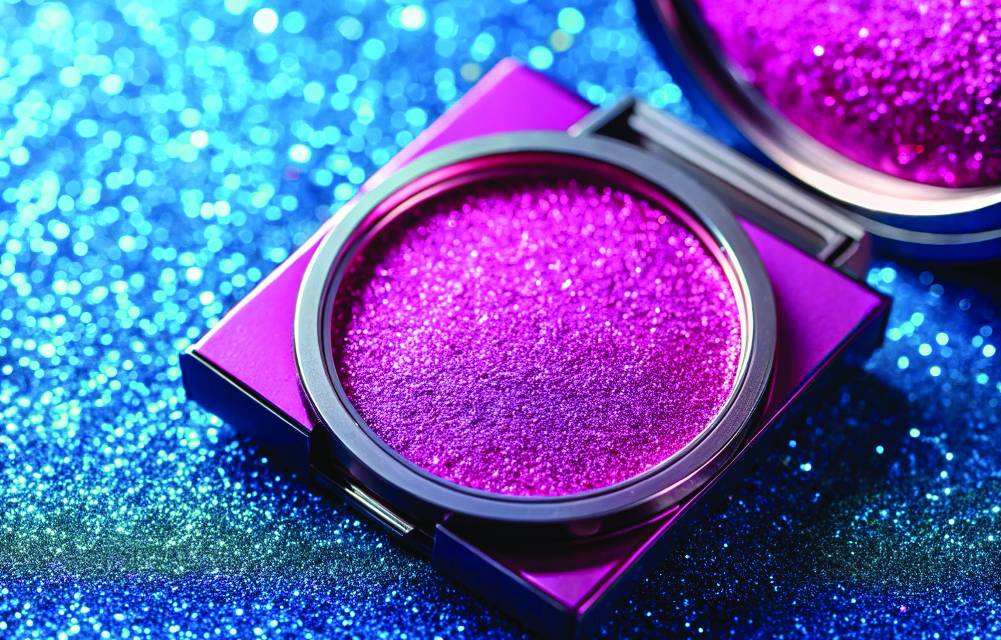
Dr. Tsai says she goes about this by stressing to patients the importance of looking at the ingredient list on each product they use, so they can avoid those that can migrate into and clog the meibomian glands. These include prostaglandin-based growth serums (isopropyl cloprostenate), lead, formaldehyde-releasing preservatives, fragrance or parfum, glitter (see pho-to), mica, lash-extending fibers, and petroleum-based waterproof formulas.

Tracy Doll, OD, FAAO, who practices in Portland, Oregon, agrees with Dr. Tsai and adds that she emphasizes to patients who have dry eye disease (DED) how these ingredients can perpetuate inflammation of the eyelids and ocular surface, interfering with successful DED treatment.
The solution: Recommend cosmetic eye products that don’t contain any toxins, urges Pam Theriot, OD, FAAO, who practices in Shreveport, Louisianna. “To make this an easier process for patients, I offer a few toxin-free products for purchase in my clinic, including a mascara and an eye makeup remover,” she points out.
She adds that she educates her eye cosmetic-wearing patients about the importance of always removing their makeup before bed, avoiding tightlining or waterlining, avoiding waterproof eye makeup, and making sure there’s no glitter in their eye shadow.
Ready to Claim Your Credits?
You have attempts to pass this post-test. Take your time and review carefully before submitting.
Good luck!